







 Mar 19, 2026 43 Minutes ReadBuilding supply wholesale is global now. This should not come as a surprise to anybody involved in this industry for the last 10 years. Global used to rhyme with modernity, free trade, and many advantages for both buying and selling countries. Today’s reality is not as simple, or positive. The supply chains for construction materials are now intricate, interconnected and operationally complex. Manageming a materials supply chain has become inherently far more difficult. In construction supply, the physical movement of product, the stream of payments, and digitized flux of information (product data, approvals, technical responsibility, etc…) usually don’t follow the same path. On larger or more regulated orders for building materials from China for example, that trend amplifies. It becomes the core condition upon which the feasibility of the import project depends. That is one reason the construction material procurement still resists the tidy supply-chain diagrams that work better in other industries. The World Bank describes the sector as short-term, project-based, and structurally fragmented. A recent UK construction products supply-chain study reaches a similar conclusion from a different angle: the route taken by the product can diverge from the one taken by ownership, payment, and responsibility within the same project....
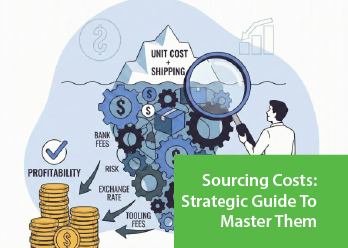
- Feb 02, 2026 9 Minutes ReadI keep fond memories of my first sourcing assignment. It was both difficult and stressful, especially when it came to sourcing costs. During that first project, I understood that the initial quote from a supplier is a bit like the first five minutes of a movie. It gives you the premise, but it certainly doesn’t tell you the whole story. For some time, I was amazed at some buyers who’d like to brag about a low unit price they’d just negotiated. They made it sound like a victory. But I know better now. As I became a seasoned procurement professional, I learned that unit price and COSG (Cost of Sold Goods) are two very different animals. If you want to increase your value as a buyer and protect your company’s bottom line, you need to look beyond the unit price on the invoice. This is why I decided to write about all the sourcing costs that a purchaser has to deal with on a daily basis. I organized this post into 3 sections, from the most obvious sourcing costs to the least obvious. I hope that my take at categorizing costs into: cash, time, and labor; will make sense to...
- Sep 13, 2023 4 Minutes ReadGetting in touch with manufacturers in China is just the first step. We understand your decision to get the products manufactured in China. It’s affordable, and yes, you get a bulk load of the products faster. But how do you control what’s happening in China? You may be getting the products manufactured in China, but to know if it meets the laid down standards should also be your priority. If you get defective products, it will harm your reputation as a business, and of course, you and the manufacturer will waste some precious time too in deciding who is to blame. You need a China inspection company that can handle the quality control aspect. What are the perks of getting a quality control expert onboard? Let’s find out in this quick post. #1 Avoid Any Possible Delays QC delivers the inspection certificates, which means you get the products within a reasonable timeframe. As a business owner, you don’t want delays because customers wait for your products. And going out of stock can harm your business’s reputation. Delays can be costly; thus, get a quality control expert onboard. #2 Quality Assurance The quality control experts check the quality of the products....
- Jul 18, 2023 1 Minutes ReadMany furniture importers have had to face unprecedented disruptions over the last 3 years. Although some may have decided to go back to local sourcing, JS Sourcing and its hospitality clients have taken note of a less stable environment, increase in costs and contraction in hospitality furniture vendor numbers. Today, we have decided to share 6 keys to successfully source international furniture from Chinese vendors in 2023.
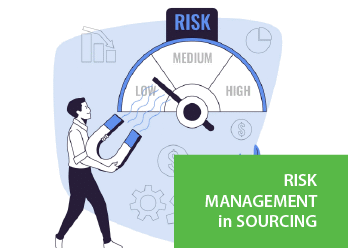
- Jul 11, 2023 6 Minutes ReadOrganizations have difficulties managing their supply chains and reducing possible hazards in today’s linked and dynamic business environment. Sourcing and risk management are two crucial tactics used to overcome these issues, especially when working with a Chinese sourcing company. But it’s necessary to consider and comprehend the intricacies and misunderstandings surrounding these ideas. We may learn important lessons about how businesses might improve their operations and strengthen their competitive advantage by examining the nuances of these practices. The Holistic Approach to Risk Management A complete and integrated strategy is used in the holistic approach to risk management to detect, evaluate, and reduce risks across the whole supply chain. It goes beyond retaliatory actions and emphasizes proactive detection and disruption avoidance. This strategy places a strong emphasis on comprehending how risks are interrelated, creating effective mitigation methods, and assuring business continuity and resilience. Organizations may successfully traverse uncertainties and protect their supply chain operations by considering various risks and implementing measures to handle them. The Strategic Approach to Sourcing A thorough and forward-looking perspective beyond temporary cost-cutting initiatives is a key component of the strategic approach to sourcing. It tries to provide a sustained competitive advantage by coordinating sourcing efforts with...
- Jun 16, 2023 6 Minutes Read3 reasons why China still relevant to outsource manufacturing and participating to world growth in 2023
- Apr 04, 2023 6 Minutes ReadWhen sourcing raw materials or products from a foreign country, there are many challenges that you may encounter. But sourcing agencies are here to make it easy for you. A reliable sourcing agent will take care of the whole process so that you get the best deals and high-quality products. Many China inspection services do a thorough quality check before the products reach you. However, there are also many disadvantages associated with hiring sourcing agents. PROS OF USING A CHINA SOURCING AGENT Vast Network Sourcing agents use their vast network to accommodate you with the best services and products. They have a wide range of connections due to their focus on establishing relationships with the best suppliers and factories in the source country. Knowing that your sourcing agent has chosen your supplier will make you feel confident about your purchase, as they will connect you with only verified and trustworthy manufacturers. Some sourcing agents may also connect you with factories outside China, which will give you a competitive advantage as you can access higher-quality products. You can hire China inspection services to get products of the highest quality. Can Spot Fake Suppliers Sourcing agents know how to detect trustworthy manufacturers from fake...
- Jan 17, 2023 1 Minutes ReadConstruction companies, building supplies wholesalers, home builders and home improvement retailers all rely on purchasing the most competitive building material supply wholesale to boost their business. However, finding the right building supplies manufacturers is easier said than done. JS Sourcing has listed 4 essential tips for construction products professionals when purchasing building materials from China.
- Jun 06, 2021 8 Minutes ReadLet's look into the types of Chinese suppliers and how to select the best Chinese manufacturing Companies for your business. It is the first step to building an efficient and sustainable supply chain in China.
- Jun 04, 2018 9 Minutes ReadIt is now more than ever relevant to hire purchasing agent so as to ensure survival amidst ever increasing manufacturing, logistics & operating costs.
- Sep 07, 2026 30 Minutes ReadTake one real lot and trace it in both directions. You should be able to confirm the exact product, find the production and release records behind it, and account for every unit that was received or shipped. If 15,000 units came in, the stock, customer shipments, samples, returns, and disposal records should add back to 15,000. Different production, packaging, or sterilization numbers are fine as long as the records clearly show how they are connected. Record the Product First Start with a unit from the actual shipment. Copy the information from the label rather than relying on a supplier spreadsheet. Field What to Record Manufacturer Legal manufacturer shown on the label Product Exact product name REF/catalog number Manufacturer’s item number Lot/batch Every character exactly as printed Expiry If shown Manufacture date If shown UDI If applicable Pack size Units per pouch, box, or case Sterile status Sterile or nonsterile Supplier Company that shipped the goods PO Your purchase order Quantity Quantity received from this lot Keep the lot number exactly as printed. Do not remove leading zeros, spaces, letters, hyphens, prefixes, or suffixes. For example, 026A107 should not automatically become 26A107. Software sometimes removes a leading zero, but the two...
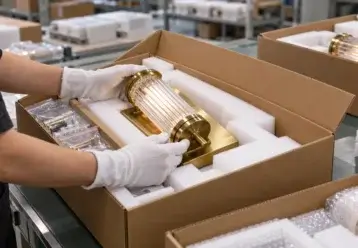
- Sep 07, 2026 32 Minutes ReadBefore the lighting ships, compare the real production goods with the final approved drawing, sample, BOM, finish, dimensions, voltage, driver, LED board, CCT, dimming setup, mounting parts, safety requirements, and packing. Open selected fixtures, test every function, measure the dimensions that affect installation, and compare lights that will be used together. If you find the wrong part, a safety issue, or the same defect more than once, check how much of the batch may be affected before releasing the shipment. Approved Inspection Pack The inspector should work from the final approved files: shop drawings; golden sample or approved production sample; product specification; bill of materials (BOM); finish sample or finish code; LED and driver specification; CCT and CRI requirements; dimming specification; voltage and frequency; installation drawings; packaging specification; required test and compliance documents. Check the revision number first. If Drawing Rev. A shows a 120 mm backplate but Rev. C was later approved at 135 mm, use 135 mm for inspection. If the latest drawing and approved sample do not match, record the difference and get confirmation before passing that item. These conflicts are easier to find during a pre-production inspection, before the wrong version is used across the full...
- Sep 07, 2026 25 Minutes ReadStart with one approved BOM and make every production run match it. Each item needs a fixed quantity, measurable specification, approved source, shelf-life rule and inspection limit. If 5,000 kits each need 20 bandages, production should account for about 100,000 bandages plus recorded samples or scrap. Any change to the supplier, size, material, formulation or label should be reviewed before it reaches the packing line. Start With the Actual Use Decide who will use the kit, where it will be stored and where it will be sold before choosing the contents. Item Example Market United States User Household Use Minor cuts, scrapes, burns and basic first aid Capacity Family of 2–5 people Storage Home or vehicle Case Portable zip pouch Drug products Yes / No Refillable Yes / No Sales channel Retail / Marketplace / Distributor Required standard If applicable The same content list will not work equally well for every use. Kit Type What Changes Vehicle Storage temperature, adhesives, wipes, medicines and long storage periods matter more. Workplace Quantities need to reflect worker numbers, hazards and how quickly supplies can be replaced. Outdoor Moisture, case strength, weight and storage conditions need more attention. Household Common minor injuries and simple...
- Sep 07, 2026 27 Minutes ReadWhen comparing PIR and PUR sandwich panel suppliers, make sure everyone is quoting the same thing first. Core type, thickness, steel facings, coating, thermal data, fire reports, joints, structural data, factory QC, delivery, packing, and warranty all need to line up. If a supplier cannot meet a required fire, thermal, structural, or compliance condition, there is no point comparing its price with the others. RFQ Data to Send Item What to Specify Application Wall, roof, ceiling, cold room, clean room, warehouse Core PIR or PUR if already fixed Thickness Required thickness or project U-value Outer steel Thickness, grade where required, coating Inner steel Thickness, grade where required, coating Effective width Installed cover width, not only physical width Length Exact project lengths or cutting schedule Joint Concealed, exposed, tongue-and-groove, roof overlap Thermal Required conductivity or U-value Fire Required classification, approval, or test standard Structural Wind, span, roof/wall use, support arrangement Accessories Flashings, screws, washers, sealants, closures Commercial Quantity, destination, Incoterm, delivery date You may see common options such as 50, 75–80, 100, 120–125, 150, or 200 mm cores, effective widths around 1,000–1,200 mm, and steel facings such as 0.40, 0.50, or 0.60 mm. These are only common product examples. They are...
- Sep 01, 2026 33 Minutes ReadA wider range can increase revenue, improve customer retention and reduce dependence on one product. It can also turn a healthy business into a warehouse full of slow stock. Relying solely on the fact that your long time Chinese manufacturing partner tells you that this product is “trendy” does not necessarily mean that your stocks will sell fast. The decision how to expand your product portfolio with China suppliers is yours only. And you are in the best position to assess your market, retail or wholesale price, and all the key parameters that ensure the success of a new addition to your product range. In short: To expand your product portfolio with China suppliers, start with proven customer demand, choose the right development and supplier route, calculate the full landed economics, qualify the manufacturing process, and use a pilot order before scaling. The supplier should support the product strategy. The supplier catalog should not define it. What It Means to Expand Your Product Portfolio With China Suppliers Product portfolio expansion means adding products that give customers a relevant new reason to buy. It does not necessarily mean entering a completely new industry. For most importers, the lowest-friction opportunities sit close...
- Aug 25, 2026 41 Minutes ReadA sourcing company reduces procurement costs when its supplier access, product knowledge, quality control, logistics coordination, and local follow-up remove more cost than the company charges in fees. The saving should be measured against the buyer’s total procurement cost, not only against the lowest factory quotation. Consider a 50,000-unit order. A $0.20 reduction in unit price saves $10,000. One $8,000 emergency shipment and $4,000 of rework turn that apparent saving into a $2,000 loss. This is why a useful sourcing company works on the complete cost of the order: product, quality, logistics, inventory, cash exposure, internal workload, and supplier risk. In short: the sourcing company’s job is not only to identify the best value for money offer from manufacturers. A sourcing agent’s procurement value lies in its ability to reduce expenses and risks throughout the order in China process. It empowers international buyers with additional, sourcing-specific skills, and prevents business exposure to quality costs and brand damage. Start With the Full Procurement Cost, Not the Unit Price Purchase price is only one cost layer. The European Commission’s guidance on life-cycle costing makes the same basic point: acquisition price does not capture every cost of purchasing, using, and disposing of a...
- Aug 14, 2026 28 Minutes ReadDuring Production Inspection (DUPRO or DPI) means checking an order while the factory is still making it. At JS Sourcing, DUPRO is usually arranged when about 20% to 80% of the order has been produced. The inspector checks the goods already made, production progress, important dimensions, workmanship, parts, function, packaging, and any defects that keep showing up. If 2,500 pieces of a 10,000-piece order are finished and the same hole-position problem is already appearing, the factory still has 7,500 pieces that can be made after the process is fixed. Book Before the Risky Process Choose the inspection time based on the production step you want to check. The best time is usually before a problem becomes difficult or expensive to fix. Product Useful Check Point What to Check What Becomes Harder Later Machined metal parts Before plating or coating Hole position, threads, thickness, flatness, fit Machining again may damage the finished surface Injection-molded parts After normal mass production starts Flash, sink marks, deformation, dimensions, fit The same molding problem may spread to thousands of parts Furniture Before important joints are covered Frame size, hole position, joints, assembly Upholstery or finishing may hide structural parts Garments During normal sewing production Measurements,...
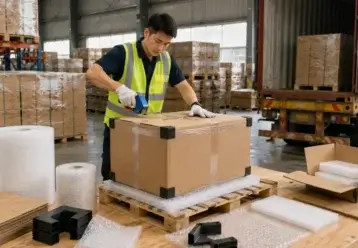
- Aug 14, 2026 27 Minutes ReadMost shipping damage should be dealt with before the goods leave the factory. Keep the product from moving inside the box, stop finished surfaces from rubbing together, use cartons and pallets that suit the real weight, keep the goods dry, inspect the finished packing, and make sure the cargo cannot shift during loading and transport. Start With How the Product Can Be Damaged Product Main Risk What to Check First Glass and ceramics Cracks, chipped edges, broken handles Separation, edge protection, movement Furniture Scratches, crushed corners, broken fittings Surface protection, corners, loose hardware Metal parts Scratches, rust, dents, carton failure Pack weight, separators, moisture control Electronics Impact damage, loose parts, damaged connectors Cushioning, clearance, accessory position Textiles Moisture, mold, crushed cartons Dry packing, carton strength, storage condition Long products Bending, broken ends, punctures Support points, end protection, pallet position Heavy parts Carton rupture, crushed lower cartons, pallet failure Gross weight, carton compression, pallet capacity Before you approve the packing, check these five points: Can the product move inside the carton? Can two products, parts, or accessories touch each other? Which part is easiest to break, bend, scratch, or crush? How much weight will the carton and pallet carry? Could moisture...
- Aug 14, 2026 20 Minutes ReadA good inspection report should tell you exactly what was checked, what standard was used, what the inspector found, and why the order passed or failed. It should show the correct order and batch, available quantity, sample size, measurements, test results, defects, packaging checks and photos. If something could not be checked, the report should say Not Tested or Not Available, not PASS. Order and Batch Start by checking that the report is for the right order and the right batch. Inspection report number Inspection date Buyer Supplier Factory and inspection location Purchase order number Product name SKU or model Lot or batch number Production date or date code, if used Ordered quantity Available quantity Inspected quantity If the order has several SKUs, do not combine everything into one total. Show each SKU on its own. SKU Ordered Available Inspected A101 1,000 pcs 1,000 pcs 80 pcs A102 500 pcs 500 pcs 50 pcs A103 500 pcs 420 pcs 50 pcs A103 is 80 pieces short when the inspection takes place. If the report only says “Total order: 2,000 pcs,” you would not see that shortage. The purchase order should also point to the right drawing, product specification, artwork and...
- Aug 14, 2026 23 Minutes ReadPre-shipment inspection (PSI) is the final check on an order before it ships. The inspector takes samples from the actual goods and checks the quantity, defects, dimensions, function, packaging, labels, accessories, and other requirements against the buyer’s approved documents. A useful pre-shipment inspection should give the buyer enough information to make a clear decision: ship, hold, sort, repair, re-inspect, or reject. Check Whether the Order Is Ready Before booking the inspection, ask the supplier for these three numbers: Ordered quantity Finished quantity Packed quantity Example A: Ordered: 8,000 units Finished: 8,000 units Packed: 6,800 units Packed rate: 85% All 8,000 products are finished, so the inspector can check the products themselves. But 1,200 units are not in final packaging yet, so carton quantity, labels, packing method, and shipping marks are not fully covered. Example B: Ordered: 10,000 units Finished: 6,000 units Packed: 5,800 units In this case, 4,000 units have not been made yet. An inspection of the first 6,000 units cannot be treated as a final check of the whole 10,000-unit order. If a large part of the order is still being made, a During Production Inspection is usually a better choice. JS Sourcing uses DUPRO during the 20–80%...





Tag
2024advantages of goods inspectionavoid late deliverybuilding materials suppliersbuilding sourcesbuilding suppliesbuilding supplies made in chinabuilding supply wholesalebuy from chinabuy wholesalebuying from china risksbuying wholesalecasegoods vendorschinachina furniture importchina goods inspectionchina manufacturingchina outsourcingchina product inspectionchina shippingchina sourcingchina sourcing tipschina steelchina steel newschina supplierschina trade newschina trendschina typhoonchinese manufacturerschinese suppliersconstruction material suppliersconstruction sourcingcontract furniture supplierscontract manufacturingcontruction materials sourcingcost of sold goodscustom casegoodsdisrupted shippingdupro qc checkexport regulationsfactory auditfactory directFF&EFF&E quality checksFF&E sourcing tipsfind suppliersglobal sourcingglobal tradeglobal trade 2023hospitality sourcinghospitality suppliershow to find hospitality suppliershow to sourceimport building productsimport exportimport-exportimport-export newsimporting building suppliesimporting from china tipsinternational buyersmade in chinamade in china hotel suppliesmanufacturingmanufacturing companiesmanufacturing outsourcingmanufacturing products chinamitigating risksoffshoring manufacturingoutsourcing costsoutsourcing manufacturingpackaging qualitypre shipment inspectionpre shipment quality inspectionprocurementproduct developmentproduct development and sourcingproduct inspectionproduct inspection chinaproduct portfolioproduct sourcingproducts chinaprofessionnal sourcing knowledgepurchasing agentpurchasing costsquality assurancequality checkquality controlquality control knowledgequality inspectionquality inspection companyquality made in chinaquality solutions low cost sourcingreduce risks sourcing from chinarisk managementrisks sourcing from chinashipping from chinasourcingsourcing chinasourcing china benefitssourcing companiessourcing company advantagessourcing costsourcing disruptionssourcing guidesourcing in chinasourcing infographicssourcing processsourcing profitabilitysourcing specialist knowledgesourcing specialistssourcing steelsourcing strategiessourcing strategysourcing teamsourcing tipssourcing trendssteel exportssupplier evaluationsupply chainsupply chain knowledgetyphoon chanthutyphoon hitting chinaus china importsvalue of sourcing companies


